
+1-242
The Bahamas
We have a team of experienced professionals dedicated to supporting all your business requirements—ensuring smooth operations and full regulatory compliance. This strong foundation enables you to confidently establish and grow your business in The Bahamas with efficiency and assurance.
The Bahamas
The Bahamas, officially the Commonwealth of the Bahamas, is an island country located within the Lucayan Archipelago in the Atlantic Ocean. The country comprises more than 3,000 islands, cays and islets in the Atlantic Ocean, located north of Cuba and north-west of the island of Hispaniola (split between the Dominican Republic and Haiti) and the Turks and Caicos Islands, southeast of the US state of Florida and east of the Florida Keys. The capital and largest city is Nassau on the island of New Providence. The Royal Bahamas Defence Force describes the Bahamas’ territory as encompassing 470,000 km2 (180,000 sq. mi) of ocean space. The Bahamas maintains King Charles III as its monarch; the appointed representative of the Crown is the governor-general of the Bahamas. The Bahamas has the fourteenth-largest gross domestic product per capita in the Americas. Its economy is based on tourism and offshore finance.
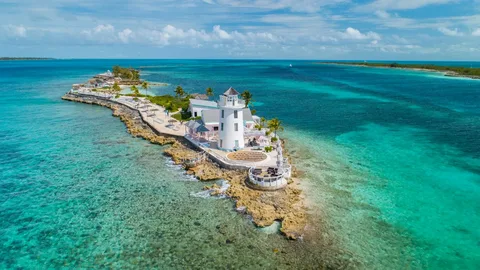
Though the Bahamas is in the Lucayan Archipelago, and not in the Caribbean Sea, it is still considered part of the wider Caribbean region. The Bahamas is a full member of the Caribbean Community (CARICOM). The country’s nominal GDP expanded to $13.82 billion in 2023. This growth is set to increase, according to the IMF, by 2.3% in 2024. The Bahamas has one of the highest per capita GDPs in the western hemisphere at an estimated $32,560 making this a high-income country. As the tourism industry accounts for roughly 70% of the country’s GDP, it took a massive hit in 2020 due to the pandemic, but recent growth has shown that the nation’s economy is back on track.
Foreign direct investment (FDI) is also a significant part of the economy, allowed in 15 sectors (primarily tourism) and contributing roughly 4% of GDP. Most FDI inflows come from the US, which also has important and ubiquitous trade and transportation links with the Bahamas. The Bahamian economy is continuing to grow steadily, and the Bahamas is considered a high-income country. However, while the per capita GDP is very high, real salaries reveal a large income disparity. The minimum wage in the Bahamas is 260 BSD/week or 1,125 BSD/month, while the average salary is roughly 3,900 BSD/month. This average is likely inflated by high-income earners as many Bahamian workers’ salaries are far below this average. Combined with 5.6% employer contributions to social security, hiring Bahamian employees can still be quite affordable.
ADVANTAGES
Tax-Neutral Environment:
The Bahamas is a top-tier tax-neutral jurisdiction. Businesses benefit from the absence of taxes on profits, capital gains, corporate income, personal income, dividends, and inheritance.
Strategic Proximity to Major Markets:
Located just 50 miles off the Florida coast, it offers excellent access to U.S., Caribbean, and Latin American markets.
Stable Political and Economic Climate:
As a sovereign nation with a long history of democratic, stable government, it provides a safe, secure, and predictable environment for foreign investment.
Well-Developed Financial Sector:
The jurisdiction is highly reputable for banking, trust services, and, increasingly, for Fintech and cryptocurrency, offering advanced financial infrastructure.
Investment Incentives and Ease of Business:
The government actively encourages Foreign Direct Investment (FDI), featuring streamlined company formation (e.g., International Business Companies – IBCs), no exchange controls, and incentives for specific industries.
Robust Privacy Protection:
The jurisdiction is known for maintaining high levels of confidentiality for business owners, protecting financial information from foreign governments and competitors.
English-Speaking Professional Workforce:
The official language is English, and the country boasts a well-educated, skilled labour force, primarily focused on the service, tourism, and financial sectors.
TAX REGIME
Income & Corporate Tax:
There is no personal or corporate income tax. However, as of January 1, 2024, a 15% Domestic Minimum Top-up Tax (DMTT) applies to multinational enterprises with revenues exceeding EUR 750 million.
VAT:
A Value Added Tax (VAT) is levied on most goods and services, typically at 10% or 12%.
Business License Fees:
Companies pay annual fees based on turnover, rather than profit, which vary by industry.
Property Tax:
Annual property taxes are applied, with specific rates for owner-occupied, residential, and commercial properties.
No Capital Gains/Withholding Tax:
There are no taxes on dividends, capital gains, or interest paid to non-residents.
Stamp Duty:
Transactions, including real estate sales (typically over $100,000) and certain documents, are subject to stamp duty.
Customs Duties:
High import duties are a primary revenue source, often ranging from 25% to 40%, with some exceptions.
National Insurance:
Both employers and employees contribute to the National Insurance Board based on wages.
Tax Residency:
Individuals can obtain tax residency by purchasing property (minimum $1.5 million for accelerated, or lower thresholds for regular) and spending at least 90 days in the country.
THE BAHAMAS COMPANIES
International Business Company (IBC):
The most common vehicle for offshore operations, offering high confidentiality, no minimum capital, no tax, and no audit requirements.
Limited Liability Company (LLC):
Often used for joint ventures or U.S.-connected investments, providing flexible governance and, in some cases, pass-through taxation.
Segregated Account Company (SAC):
Used frequently for investment funds, fintech, and captive insurance, as it allows for the legal separation of assets and liabilities within different accounts under one entity.
Exempted Limited Partnership (ELP):
A flexible structure used for investment funds and private equity, allowing for limited liability for investors.
Domestic Limited Company:
Formed under the Companies Act 1992, suitable for businesses operating within the Bahamas.
Other Entities:
These include Sole Proprietorships, General Partnerships, Unlimited Liability Companies, Foundations, and Non-Profit Companies.
RELATED BLOGS

Contact Us
Get in touch with the right people to get the right help in setting up your business in The Bahamas.
enquiries@chandrawatpartners.com.