
+503
El Salvador
We have a team of experienced professionals dedicated to supporting all your business requirements—ensuring smooth operations and full regulatory compliance. This strong foundation enables you to confidently establish and grow your business in El Salvador with efficiency and assurance.
WHY EL SALVADOR?
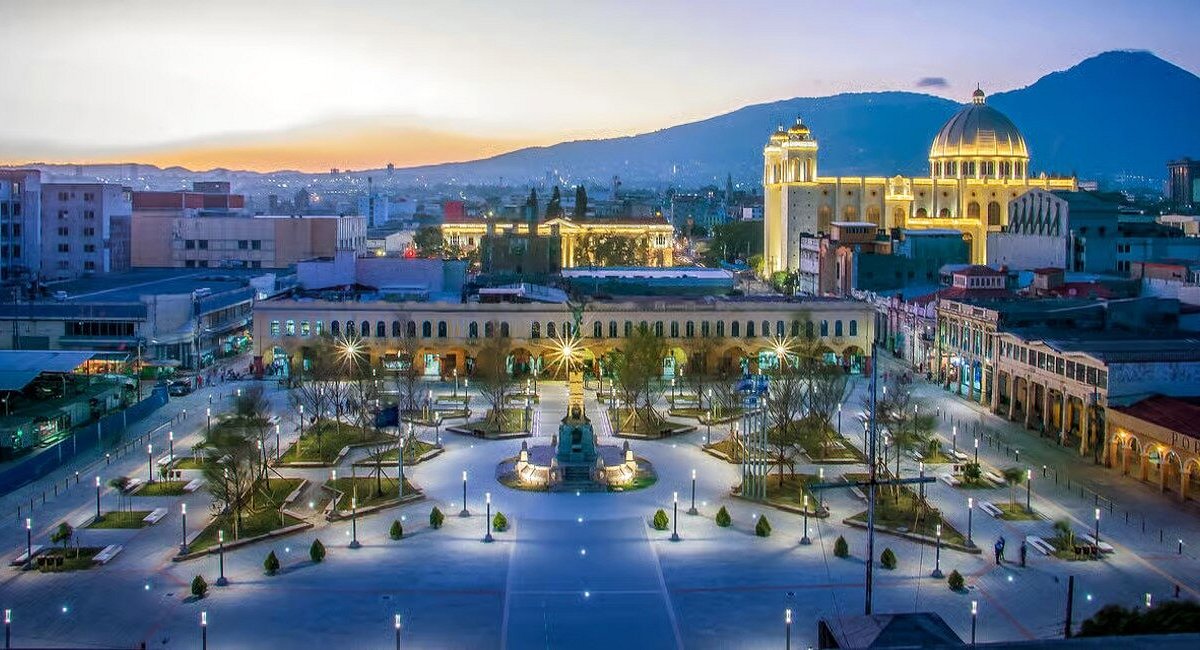
El Salvador, officially the Republic of El Salvador, is a country in Central America. It is bordered on the northeast by Honduras, on the northwest by Guatemala, and on the south by the Pacific Ocean. El Salvador’s capital and largest city is San Salvador. El Salvador’s population in 2024 was estimated to be 6 million. El Salvador has become a popular international destination to start a business because it offers investors attractive tax laws, a free market economy, and a well-developed private financial system. Interestingly, El Salvador has integrated the U.S. dollar as a legal tender to prevent fluctuations in currency. Despite El Salvador being the smallest Central American country, it has a tech-savvy market and has free trade agreements with Costa Rica, the U.S., the European Union, and Mexico, among others. In addition to a stable currency and business-friendly policies, El Salvador’s centralized location provides ease of access to neighbouring markets, including Honduras, Mexico, and Nicaragua. Another key takeaway is that El Salvador provides 100% foreign ownership when starting a business. Doing business in El Salvador is affordable, owing to tax incentives and relatively low labour costs, all while accessing a talented workforce.

El Salvador is a middle-income country with an economy supported by agriculture, exports, and the services sector. Over the last decade, the country has experienced economic growth and recovery, with its GDP climbing to $34 billion in 2023. The recent economic growth is attributed to tourism and the strong agricultural sector. In 2023, the agriculture, forestry, and fishing sector contributed $1.36 billion to GDP. Furthermore, El Salvador’s economy is strengthened by manufacturing and food production, with its 2024 exports reaching $5.99 billion from January to November. Recently, the country has experienced increased interest in foreign investment in supplies for renewable energy and aims to enhance the technology industry. El Salvador has gained international attention for its open, investment-friendly economy. With generous tax incentives and a free-market approach, the government places fewer restrictions on foreign businesses making it easier to enter the market and capitalize on the country’s many trade opportunities. Strategic access to North and South American markets, a dollarized economy further boosts its appeal.
ADVANTAGES
Dollarized Economy:
The U.S. dollar is the official currency, eliminating foreign exchange risk and reducing transaction costs for international, especially U.S.-based, companies.
Strategic Location and Connectivity:
Located in the centre of the Americas, El Salvador offers easy access to both North and South American markets, sharing a time zone with the Central United States. It also provides access to Pacific Ocean ports, including Acajutla and La Union.
Attractive Tax Incentives and Free Zones:
The Law for the Promotion of Technological and Manufacturing Innovation provides exemptions from income tax and municipal taxes for software development, AI, cloud computing, and hardware manufacturing. Free trade zones allow for tax-free, duty-free importation of machinery and goods.
- Low Operating Costs: Lower labour costs and a competitive minimum wage make it an attractive location for outsourcing and manufacturing.
- Simplified Business Registration: The government has digitized many services, significantly reducing the time needed for permits and authorizations.
- Pro-Business Environment & Bitcoin Legal Tender: The government has prioritized economic reforms to attract foreign investment. In 2021, it became the first country to adopt Bitcoin as legal tender, aiming to boost financial inclusion and attract fintech innovation.
TAX REGIME
Corporate Taxation
Corporate Tax Regime
- Corporate Income Tax (CIT): 30% on net taxable income.
- Reduced Rate: 25% for companies with annual taxable income of USD 150,000 or less.
- Taxable Income: Gross income minus necessary costs and expenses.
- Territoriality: Taxes apply to income from activities, goods, or services in El Salvador.
- Capital Gains: Generally taxed at a flat 10%, or as ordinary income if held for less than 12 months.

Withholding Taxes (WHT):
- 10% on payments to resident individuals for services.
- 5% to 20% on various payments to non-residents (e.g., dividends, services).
- Foreign Agents Law: A 30% tax/withholding may apply to specific financial flows from abroad, requiring strict reporting.
Individual Tax Regime
- Personal Income Tax: Residents are taxed on Salvadoran-source income at progressive rates up to 30%.
- Non-residents: Taxed at a flat 30%.
- Capital Gains: 10% on gains, or as ordinary income if held for less than 12 months.
- Exemptions: Interest on bank deposits and certain dividends.
- Inheritance/Gift/Wealth Tax: None.
Indirect and Other Taxes
- Value Added Tax (VAT – IVA): 13% standard rate on the transfer of goods and services.
- VAT Export Rate: 0%.
- Social Security: Mandatory contributions for employees and employers (e.g., $30/$75 split for salaries over $1,000).
EL SALVADOR COMPANIES
Common Business Entities in El Salvador
- Corporation (Sociedad Anónima – S.A. / S.A. de C.V.): The most frequently used structure by foreign and local investors. It is suitable for larger companies and, when structured as “de Capital Variable” (S.A. de C.V.), allows for flexible capital adjustments.
- Limited Liability Company (Sociedad de Responsabilidad Limitada – S.R.L. / Ltda.): Often chosen for small-to-medium enterprises (SMEs). Capital is divided into membership interests rather than shares.
- Simplified Stock Corporation (Sociedad por Acciones Simplificadas – S.A.S.): Allows for single-member (one person) ownership.
- Branches of Foreign Companies (Sucursal): Foreign companies can establish a, branch office to conduct business, requiring registration with the Commercial Registry.
- Sole Proprietorship (Persona Natural): A business owned and run by one individual, with unlimited liability.
Other Corporate Forms (per Commercial Code)
- General Partnership (Sociedad Colectiva – S.C.)
- Limited Partnership (Sociedad en Comandita Simple)
- Limited Partnership with Share Capital (Sociedad Comandita por Acciones)

RELATED BLOGS


Contact Us
Get in touch with the right people to get the right help in setting up your business in El Salvador.
enquiries@chandrawatpartners.com.