
+226
Burkina Faso
We have a team of experienced professionals dedicated to supporting all your business requirements—ensuring smooth operations and full regulatory compliance. This strong foundation enables you to confidently establish and grow your business in Burkina Faso with efficiency and assurance.
WHY BURKINA FASO?
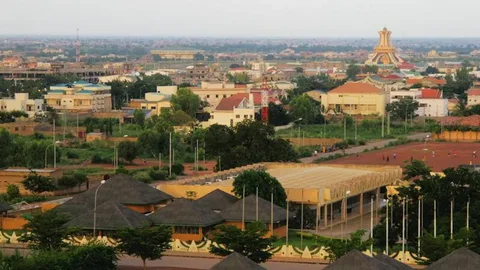
Burkina Faso is a landlocked country in West Africa, bordered by Mali to the northwest, Niger to the northeast, Benin to the southeast, Togo and Ghana to the south, and Ivory Coast to the southwest. It covers an area of 274,223 km2 (105,878 sq. mi). In 2024, the country had an estimated population of approximately 23,286,000. Called the Republic of Upper Volta from 1958 to 1984, it was renamed Burkina Faso by president Thomas Sankara. Its citizens are known as Burkinabes, and its capital and largest city is Ouagadougou.
Burkina Faso’s economy showed signs of recovery in recent years. According to the World Bank, the economy grew by 4.9% in 2024 compared to 3.0% in 2023. Real per capita GDP growth also increased from 0.7% to 2.5% over the same period. This acceleration was attributed mainly to the performance of services and agriculture, supported by an improved security situation, favourable weather conditions. However, inflation increased in 2024 to 4.2% from 0.7% in 2023. This growth is expected to continue at an average of 5% per year in the near future. This country has a wealth of natural resources and hosts very multicultural human resources as well. The country imports goods from the Ivory Coast, China, France, Ghana, and India, and it has a trade deficit of around $1.5 billion.
ADVANTAGES
Doing business in Burkina Faso involves navigating streamlined registration via CEFORE, leveraging opportunities in mining, agriculture, & renewables, and understanding its strategic ECOWAS location, though complexities like customs and regional instability require local expertise. Burkina Faso offers advantages like a young, trainable workforce, strategic West African market access via WAEMU/ECOWAS, stable CFA currency, abundant natural resources (gold, cotton), government incentives (tax breaks), and growth opportunities in energy (solar), agribusiness, and infrastructure, supported by ongoing reforms to attract investment.
Market Access & Stability:
- Regional Gateway: Central location in West Africa provides access to large regional markets (ECOWAS).
- Monetary Stability: Membership in WAEMU and use of the CFA Franc (pegged to the Euro) ensures currency stability.
- Trade Agreements: Benefits from agreements like AfCFTA, boosting export potential.
Economic & Resource Strengths:
- Gold Production: A major gold producer (Africa’s 4th/5th largest) with vast reserves.
- Agriculture: Strong cotton production and potential for value-added agribusiness.
- Energy: High solar potential, driving opportunities in renewable energy.
- Growing Sectors: High demand in ICT, mining services, logistics, and textiles.
Investment Climate:
- Government Support: Reforms, tax holidays, duty exemptions on machinery, and support for SMEs.
- Legal Framework: Transparent systems and OHADA standardization (standardized company law).
- Investor Protections: Guarantees for repatriation of funds (dividends, profits).
- Young Population: A large, youthful, and trainable workforce.
Growth Opportunities:
- Infrastructure: Major projects in roads and connectivity create demand for construction and materials.
- Digitalization: Government focus on digital transformation opens doors in ICT.
- Sustainable Development: Focus on green investments (renewables, climate-smart ag) aligning with global trends.
SIMPLE TAX REGIME
Corporate Taxation
Corporate Tax
Corporate taxation in Burkina Faso is based on a progressive system with different tax rates depending on the size and type of the business.
- Corporate Income Tax: The standard corporate income tax rate is 27.5% for most businesses.
- Small Businesses: Small and medium-sized enterprises (SMEs) may qualify for lower tax rates under certain conditions.
- Special Tax Regimes: Specific sectors such as agriculture and manufacturing may qualify for tax exemptions or reduced rates to stimulate investment in these industries.
Personal Income Tax
Burkina Faso applies a progressive income tax rate for individuals, with rates increasing based on income levels.
- Personal Income Tax: The personal income tax rate is progressive, with rates ranging from 0% to 28% depending on the income level:
- Up to CFA 1,000,000: 0%
- CFA 1,000,001 to CFA 3,000,000: 10%
- CFA 3,000,001 to CFA 6,000,000: 15%
- CFA 6,000,001 to CFA 9,000,000: 20%
- Above CFA 9,000,000: 28%
Value Added Tax (VAT)
Burkina Faso applies a VAT system, which is consistent with many other countries in the West African region.
- Standard VAT Rate: The standard VAT rate is 18%.
- Reduced VAT Rate: A reduced VAT rate of 9% applies to certain goods and services, such as agricultural products and pharmaceuticals.
- Exemptions: Some goods and services are exempt from VAT, such as certain educational services, financial services, and health services.
Capital Gains Tax
Burkina Faso taxes capital gains derived from the sale of certain assets, including real estate and shares.
- Capital Gains Tax: The capital gains tax rate for individuals and companies is generally 10% on the sale of shares and real estate.
- Real Estate: When real estate is sold, capital gains are subject to tax. If the property is held for less than 5 years, it is taxed at 10% of the gain.
Social Security Contributions
Burkina Faso has a social security system, and both employers and employees are required to make contributions.
- Social Security Contributions: Social security contributions are used to fund pensions, healthcare, and other social services.
- Employee Contribution: The employee’s contribution is 5% of their salary.
- Employer Contribution: The employer contributes 12% of the employee’s salary to the social security system.
Withholding Taxes
Burkina Faso imposes withholding taxes on certain payments made to foreign entities and individuals.
- Dividends: Dividends paid to foreign shareholders are subject to a 10% withholding tax.
- Interest: Interest payments made to non-residents are subject to a 10% withholding tax.
- Royalties: Royalties paid to foreign residents are subject to a 10% withholding tax.
Inheritance and Gift Tax
Burkina Faso imposes taxes on inheritance and gifts, but rates vary based on the relationship between the deceased or donor and the beneficiary.
- Inheritance Tax: The inheritance tax rate depends on the relationship between the deceased and the heir. For close family members (spouses, children), the rates are lower. For distant relatives or non-relatives, the tax rate can be as high as 30%.
- Gift Tax: Gifts are taxed similarly to inheritances, with rates varying from 5% to 30% depending on the relationship between the donor and recipient.
Excise Taxes
Burkina Faso levies excise taxes on certain goods, especially those that are considered harmful or luxury items.
- Excise Tax: This includes taxes on goods such as alcohol, tobacco, and fuel. The rates vary depending on the product and are imposed at the manufacturing or importation stage.
Stamp Duty
Burkina Faso imposes stamp duty on certain legal and commercial documents.
- Stamp Duty: This tax applies to documents such as contracts, deeds, leases, and bills of sale. Rates vary depending on the value of the document and the nature of the transaction.
Local Taxes
Local municipalities in Burkina Faso may impose taxes to fund local services and infrastructure.
- Property Tax: Property owners are required to pay property taxes based on the value of the land or buildings they own.
- Business Tax: Local businesses are subject to local business taxes, which vary by region and type of business activity.
Tax Incentives for Investment
Burkina Faso offers several tax incentives for foreign and domestic investment in priority sectors, including mining, agriculture, and manufacturing.
- Investment Incentives: Companies operating in certain industries may benefit from tax exemptions or reductions, including exemptions from VAT, corporate income tax, and customs duties.
- Free Zones: Businesses operating in specific free trade zones may receive additional benefits, such as tax holidays and reduced tax rates.
Double Taxation Treaties
Burkina Faso has entered into several double taxation treaties to avoid taxing the same income twice for residents of different countries.
- Double Taxation Agreements: Burkina Faso has signed treaties with countries like France, Belgium, and others to prevent double taxation on income earned by individuals or businesses in both countries.
Transfer Pricing Regulations
Burkina Faso follows guidelines set by the OECD regarding transfer pricing to ensure that related-party transactions are conducted at arm’s length.
- Transfer Pricing: Companies engaged in cross-border transactions ensure that the pricing of goods, services, or intellectual property between related entities is consistent with market conditions.
BURKINA FASO COMPANIES
Société à Responsabilité Limitée (SARL – Limited Liability Company):
The most popular, requiring at least one director/shareholder (any nationality) and a minimum capital (around $2,000), with limited liability for partners.
Société Anonyme (SA – Public Limited Company):
For larger ventures, needs more capital (around $20,000) and at least three directors, with shareholders liable up to their contributions.
Société par Actions Simplifiée (SAS – Simplified Joint Stock Company):
Another common structure under OHADA law.
Société en Nom Collectif (SNC – General Partnership):
Partners share unlimited liability.
Société en Commandite Simple (SCS – Limited Partnership):
Features general partners (unlimited liability) and limited partners (liability limited to contribution).
Succursale (Branch Office):
For foreign companies wanting a local presence.
Entreprise Individuelle (Sole Proprietorship):
Also called a private company, with full personal liability for business debts.
Most foreign investors choose to incorporate LLCs or PLCs in Burkina Faso, and the World Bank gives this country a score of 88.2% for ease of starting a business. Burkina Faso’s growing economy, bolstered by its abundant natural resources, youthful population, and strategic location within West Africa, presents numerous opportunities for investment. The country’s focus on diversification makes it a promising destination for businesses. Entrepreneurs and investors willing to navigate its emerging market dynamics can find unique, high-growth prospects. Burkina Faso offers vast opportunities for businesses ready to invest in high-potential sectors. By aligning with the country’s developmental priorities, entrepreneurs can tap into a growing market and contribute to its economic transformation. Burkina Faso offers a mix of opportunities for businesses. For seamless market entry and workforce solutions, one can partner with remote people’s business expansion services.
RELATED BLOGS


Contact Us
Get in touch with the right people to get the right help in setting up your business in El Salvador.
enquiries@chandrawatpartners.com.