
+965
KUWAIT
We have a team of experienced professionals dedicated to supporting all your business requirements—ensuring smooth operations and full regulatory compliance. This strong foundation enables you to confidently establish and grow your business in Kuwait with efficiency and assurance.
WHY KUWAIT?
Kuwait, officially the State of Kuwait, is a country in West Asia. It is situated at the head of the Persian Gulf in the northeastern edge of the Arabian Peninsula, bordering Iraq to the north and Saudi Arabia to the south. With a coastline of approximately 500 km (311 mi), Kuwait also shares a maritime border with Iran, across the Persian Gulf. Kuwait is a city-state; most of the country’s population reside in the urban agglomeration of Kuwait City, the capital and largest city. As of 2024, Kuwait has a population of 4.82 million, of which 1.53 million are Kuwaiti citizens while the remaining 3.29 million are foreign nationals from over 100 countries.In 2019, Kuwait had the world’s third largest number of foreign nationals as a percentage of the population, where its citizens make up less than 30% of the overall population. Like most other Arab states of the Persian Gulf, Kuwait is an emirate; the emir is the head of state and the ruling Al Sabah family dominates the country’s political system. Kuwait is a high-income economy, backed by the world’s sixth largest oil reserves.
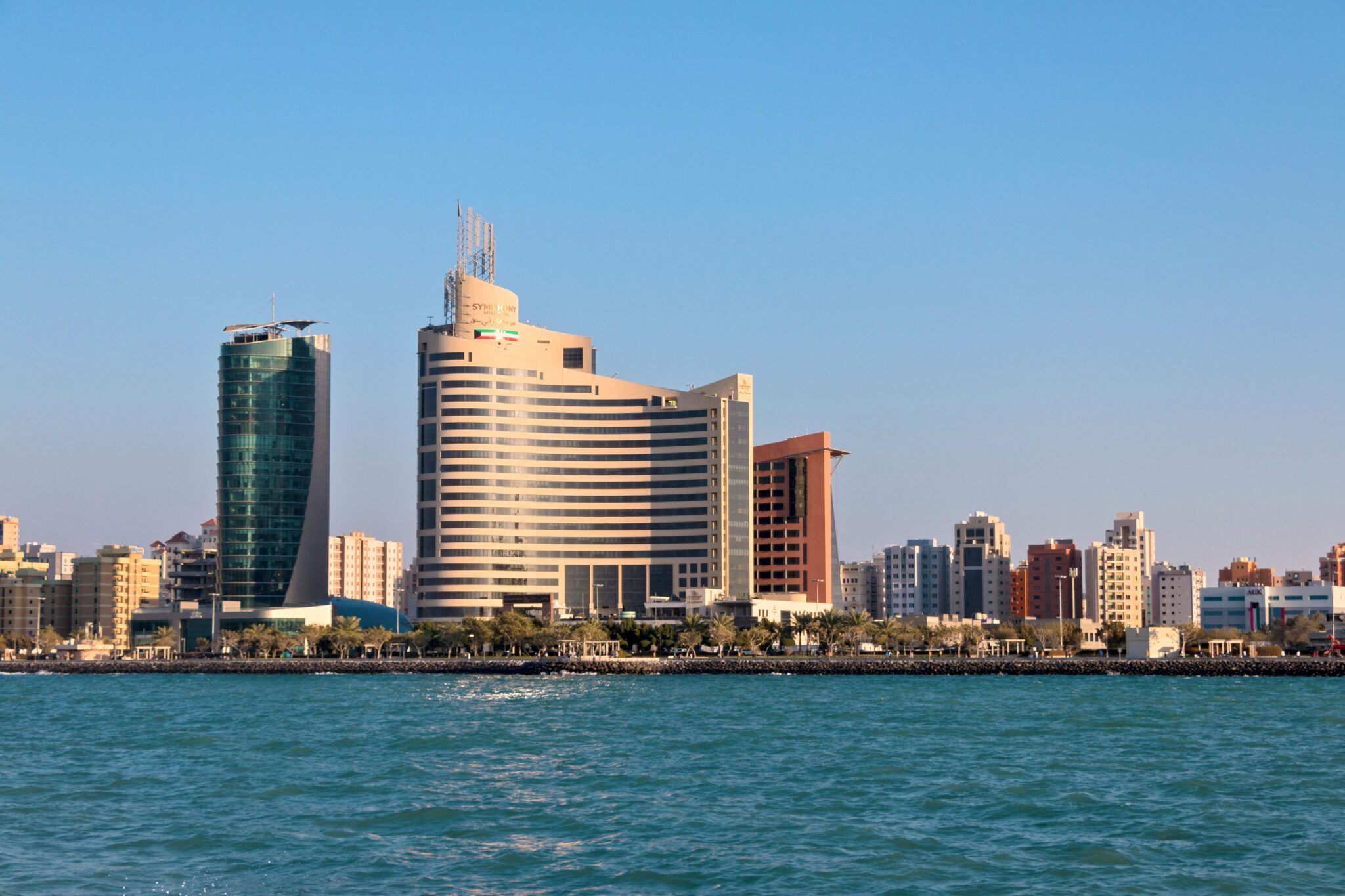
Kuwait is considered to be a pioneer in the region when it comes to the arts and popular culture, often called the “Hollywood of the Gulf”; the nation started the oldest modern arts movement in the Arabian Peninsula and is known to have created among the leading artists in the region. Kuwaiti popular culture, in the form of theatre, radio, music, and television soap opera, is exported to neighbouring Gulf Cooperation Council (GCC) states. Kuwait is a founding member of the GCC and is also a member of the United Nations, OPEC, the Arab League, and the Organisation of Islamic Cooperation.
Kuwait has a wealthy petroleum-based economy. Its official currency is the Kuwaiti dinar. By various per-capita measures of economic output, Kuwait is one of the wealthiest countries in the world. In 2021, Kuwait was the GCC region’s most oil-dependent country with the weakest infrastructure quality and lowest share of economic diversification. Globally, Kuwait’s main export products were mineral fuels including oil (89.1% of total exports), aircraft and spacecraft (4.3%), organic chemicals (3.2%), plastics (1.2%), iron and steel (0.2%), gems and precious metals (0.1%), machinery including computers (0.1%), aluminium (0.1%), copper (0.1%), and salt, sulphur, stone and cement (0.1%).[347] Kuwait was the world’s biggest exporter of sulfonated, nitrated and nitrosated hydrocarbons in 2019.Kuwait was ranked 63rd out of 157 countries in the 2019 Economic Complexity Index (ECI). The Kuwait market is business-friendly, ranking 83rd globally, with English widely used in commerce.
ADVANTAGES
Economic and Financial Advantages
- Robust Economy: Supported by vast oil reserves (among the world’s largest), Kuwait enjoys a high GDP per capita and a strong sovereign wealth fund, which ensures economic stability and a high standard of living.
- Favourable Tax Environment: Kuwait offers significant tax benefits, including:
- No personal income tax for residents or expatriate workers.
- No Value Added Tax (VAT) or sales tax.
- Exemption from capital gains tax on securities listed on the Kuwait Stock Exchange (KSE).
- Foreign companies may be eligible for a corporate tax exemption of up to 10 years for qualifying projects under the Kuwait Direct Investment Promotion Authority (KDIPA) law.
- Stable Banking System: The country has a well-regulated and stable banking and financial sector, which provides access to world-class financial services and facilities.
- Currency Strength: The Kuwaiti Dinar (KD) is one of the highest-valued currencies in the world, which can offer exchange rate advantages for international business.
Strategic and Market Advantages
- Strategic Location: Situated in the northern Arabian Gulf, Kuwait is a gateway to major markets including Saudi Arabia, Iraq, and Iran, serving as a regional hub for trade and logistics.
- Strong Consumer Market: Kuwait has a young population with high purchasing power and a strong demand for high-quality, often Western, products and services.
- Infrastructure Investment: The government has invested billions in major infrastructure projects (ports, aviation, rail, power, and water) as part of its “New Kuwait Vision 2035” to diversify the economy, creating opportunities for international investors and suppliers.
- Government Incentives: The KDIPA offers various incentives to attract foreign investment, such as customs duties exemptions and the possibility of up to 100% foreign ownership in key non-oil sectors like infrastructure, healthcare, education, and IT.
Operational and Cultural Advantages
- Subsidized Utilities: Businesses benefit from low-cost fuel and utilities due to significant government subsidies.
- Skilled Workforce: The business environment features a large, skilled expatriate workforce alongside local talent, with English widely used as a business language.
- Multicultural Environment: A significant portion of the population is expatriate, fostering a diverse and multicultural workforce and society that can help reduce culture shock for newcomers.
TAX REGIME
Personal Income Tax:
None for individuals, expats, or residents.
Corporate Income Tax (CIT):
Flat 15% on profits of foreign companies or foreign interests in local firms.
Domestic Minimum Top-Up Tax (DMTT):
A 15% tax for MNEs (revenue over €750m) effective 2025, implementing OECD Pillar Two.
Zakat:
1% of net profit for Kuwaiti shareholding companies (local/GCC-owned).
National Labour Support Tax (NLST):
A tax on companies for employing foreign workers.
Customs Duties:
Standard 5% GCC-wide tariff, with exemptions for certain goods.
VAT/Excise:
Currently none.
KUWAIT COMPANIES
Limited Liability Company (WLL):
The most common form, suitable for small to medium enterprises with 1 to 50 shareholders. Liability is limited to capital invested.
Kuwait Shareholding Company (KSC):
Required for large projects or specific sectors.
Public (KSCP):
Shares can be traded publicly, requires at least 5 founders.
Closed (KSCC):
Shares are not traded publicly; better for foreign ownership restrictions.
Single Person Company (SPC):
A company fully owned by one individual or corporate entity, with liability limited to the allocated capital.
Branch Office:
Foreign companies can establish a branch to perform specific contracts, though this is often more complex than setting up a WLL.
Joint Venture:
An unregistered, contract-based partnership, usually between a foreign entity and a local partner.
RELATED BLOGS
Contact Us
Get in touch with the right people to get the right help in setting up your business in Kuwait.
enquiries@chandrawatpartners.com.