
How to Incorporate an LLC (S.R.O.) in Slovakia - A Detailed Professional Overview & Key Insights for Entrepreneurs Across the World
A step-by-step walkthrough blog for entrepreneurs, advisers, and foreign investors who want to form a Slovak Limited Liability Company (SPOLOČNOSŤ S RUČENÍM OBMEDZENÝM – S.R.O.), and practical notes on doing business in Slovakia, post-incorporation obligations.
Introduction to Guatemala
Slovakia is a centrally-located EU member state, in the heart of Central Europe. It uses the euro, offers direct access to the EU single market, and has a well-educated, multilingual workforce (especially in engineering and IT). For investors the main business advantages are: EU regulatory alignment, competitive labour costs compared with Western Europe, good transport links to EU neighbours, and an ecosystem for car-manufacturing, electronics and business services.
What Business Form Foreign Investors Typically Choose?
The most common vehicle is the S.R.O. (limited liability company). It’s flexible, familiar to international investors, limits shareholder liability to their capital contributions, and may be formed by a natural person or a corporate founder (including non-resident founders).
Economic Highlights Businesses Should Know
- Legal form: S.R.O. — Limited Liability Company.
- Minimum registered capital: EUR 5,000 total; minimum contribution per shareholder normally EUR 750. Before entry in the Commercial Register a portion of cash contributions must be paid in.
- Commercial Register timing: registration deadlines and processing are fast (official guidance indicates very short statutory deadlines; routine registrations often complete within days).
- Corporate tax & key tax changes: corporate tax and personal tax bands have been changing recently.
- VAT: standard VAT was raised to 23% (effective 1 Jan 2025) and VAT registration thresholds and rules have been updated recently.
Detailed Step-by-Step: How to Incorporate an S.R.O. in Slovakia
Practical incorporation checklist and timeline:
A. Preparatory decisions (day 0–3)
- Decide shareholder(s) — one or more (a single-member S.R.O. is allowed). Each shareholder can be an individual or a legal entity (foreign entities allowed).
- Decide registered capital and share allocation — minimum EUR 5,000 in total; minimum per shareholder usually EUR 750. Decide cash vs non-cash (in-kind) contributions and their valuation.
- Choose company name — check uniqueness at the Commercial Register.
Choose business activities (trade codes) — these are used in trade licences and tax filings.
B. Documents to prepare (typical list)
- Memorandum of Association / Articles of Association (founding deed).
- Founders’/shareholders’ IDs or corporate extracts (apostilled / legalised or with an apostille/consular legalization where required; many documents must be translated into Slovak by a certified translator).
- Proof of registered office (lease or owner’s statement) and written consent of the premises owner.
- Bank confirmation of paid-in capital (if cash contributions are required to be paid before registration).
- Power of attorney if founders won’t attend signing (often notarised).
Director(s) acceptance statements and specimen signatures.
(Professional providers prepare detailed document packs and handle translation/notarisation.)
C. Payment of capital — what’s required before registration
At least 30% of each cash contribution is usually required to be paid before submitting the incorporation application; however, total paid-in cash contributions together with the value of non-cash contributions must reach at least EUR 2,500 before entry in the Commercial Register (practical rules vary by case — advisers often ensure the full EUR 5,000 is evidenced at start to avoid follow-up).
D. Notary and signatures
Founders sign the foundation documents before a Slovak notary (or sign abroad with authenticated signatures/power of attorney depending on circumstances). If foreign founders cannot attend, a properly executed power of attorney allows local representatives to sign. Translations and notarised signature certification are common steps.
E. Filing with the Commercial Register
Submit the application to the Court / Commercial Register with all required attachments. Official portals and prescribed forms are used; you normally attach proof of paid capital, ID/corporate extracts, lease for registered office, confirmation of trade licence where required, and directors’ declarations. Official processing times are short; official guidance indicates the deadline for registration is very fast (routine filings may take only a few days, though realistic timing depends on document completeness).
F. Fees & typical external costs
State Court fee (registration): variable but commonly a few hundred euros (e.g., some providers list approx. €350 registration handling as a reference for service fees). Notary fees, translation and representation add to the cost. Expect notary + translation + bank fees and adviser fees on top of state fees. Exact amounts depend on your provider and whether documents require apostilles.
G. After registration — immediate post-incorporation steps
- Obtain company extract and company tax ID — usually issued after registration.
- Open a company bank account — banks require company documents, director IDs, and often a business plan / proof of activity.
- Register for VAT — mandatory when turnover thresholds are exceeded or for non-residents performing taxable supplies in Slovakia. The resident threshold is subject to recent adjustments (see VAT section).
- Register as employer with social insurance and health insurance funds if you will employ staff.
- Obtain any required trade licences or sectoral permits (certain regulated activities need licences).
Corporate Governance — Shareholders, Managers, Liability
- Managers / Statutory Bodies: S.R.O. has an executive director (or board, depending on the articles). Directors manage day-to-day operations and represent the company. Director residency is not a prerequisite for forming an S.R.O.; foreign directors are common.
- Liability: shareholders’ liability is limited to their contributions (except for exceptional statutory breaches or personal guarantees).
- Single-member S.R.O.: allowed; standard rules apply but some documentation and formalities differ.
Taxes, VAT and Payroll — Current Considerations
Corporate income tax: Slovakia’s corporate tax regime has seen changes. Reliable tax guides (PwC, Accace) should be checked at formation for exact bands and rulings relevant to your income and structure. For example, tax bands and withholding rules have been adjusted in recent fiscal years; professional tax advice is recommended at incorporation.
VAT: the standard VAT rate was raised to 23% effective 1 January 2025; mandatory VAT registration thresholds for resident businesses have been updated (sources show thresholds near €49,790 for residents in recent guidance but note legislative proposals and adjustments may alter the figure). Non-resident businesses typically have no threshold and must register when making taxable supplies in Slovakia. Because VAT rules change, confirm the current threshold before trading.
Payroll & social security: employers must register with the social insurance agency and health insurance funds and withhold employee contributions. Salaries, payroll taxes, and social burden rates are subject to statutory percentages and annual indexing work with a payroll provider for compliance.
Tips for Foreign Founders
- Use a local registered office / address provider — courts and tax offices require a local registered office.
- Prepare certified translations early — foreign documents almost always need certified Slovak translations.
- Consider using a local formation agent — they will handle notary, translations, bank introductions and Commercial Register interactions. This is common practice and speeds up the process.
- Bank relationships: banks perform KYC and may request business plans, proof of activity and references. Expect varying onboarding times between banks.
- Work & residence permits: if directors or employees will live and work in Slovakia, check visa/residence permit requirements and start those processes early. Forming the company is not itself a substitute for a work permit.
Timeline - A Realistic Estimate
- Preparation & documents gathering: 1–2 weeks (can be faster if founders are local and documents are ready).
- Notary + payment of capital: a few days.
- Commercial Register filing & decision: statutory deadlines are short and practical registrations often complete within a few business days if documents are complete, but allow 1–3 weeks to be conservative in cross-border cases. Official guidance indicates quick processing is possible.
Conclusion
Incorporating A Limited Liability Company (S.R.O.) in Slovakia offers entrepreneurs and international investors a practical and efficient gateway into the European Union market. Slovakia’s strategic location in Central Europe, euro currency, business-friendly regulatory environment, and access to a skilled workforce make it an attractive jurisdiction for both startups and expanding foreign businesses. The S.R.O. structure provides limited liability protection, flexibility in ownership and management, and relatively modest capital requirements, making it suitable for a wide range of commercial activities.
While the incorporation process is generally streamlined and transparent, careful attention must be paid to documentation, notarisation, certified translations, capital contribution requirements, and post-incorporation compliance such as tax, VAT, and social security registrations. Recent changes in tax and VAT regulations further highlight the importance of professional planning at the incorporation stage.
Overall, with proper guidance and local support, setting up an LLC in Slovakia can be a smooth and strategically rewarding step for businesses seeking stability, EU market access, and long-term growth opportunities.
How We May Assist
We provide comprehensive end-to-end support for LLC (S.R.O.) incorporation in Slovakia, ensuring a smooth, compliant, and time-efficient setup for both local and foreign entrepreneurs. Our services are designed to cover every stage of the company lifecycle from initial structuring to ongoing compliance.
Our assistance typically includes:
- Pre-incorporation advisory:
Guidance on the most suitable corporate structure, shareholding pattern, capital planning, and business activity classification in line with Slovak regulations.
- Drafting and documentation:
Preparation and review of the Memorandum and Articles of Association, shareholder resolutions, director appointment documents, and related corporate records.
- Notarisation and legal formalities:
Coordination of notary services, certified translations, apostille/legalisation of foreign documents, and execution through powers of attorney where required.
- Company registration:
Filing and follow-up with the Slovak Commercial Register, obtaining the Certificate of Incorporation and official company extracts.
- Registered office support:
Assistance in arranging a compliant registered office address in Slovakia, including landlord consents where applicable.
- Bank account opening assistance:
Support with corporate bank account opening, KYC documentation preparation, and liaison with banks.
- Tax and VAT registrations:
Registration for corporate income tax, VAT (where applicable), and guidance on ongoing tax compliance obligations.
- Post-incorporation compliance:
Support with accounting, payroll registration, social security registrations, annual filings, and statutory record maintenance.
- Ongoing corporate services:
Assistance with changes in directors or shareholders, share transfers, capital changes, and general corporate governance matters.
By engaging our services, clients benefit from local expertise, regulatory clarity, and a single point of coordination, allowing them to focus on business growth while we manage the administrative requirements of operating an LLC in Slovakia.
For more information or queries, please email us at
enquiries@chandrawatpartners.com
Key Contact
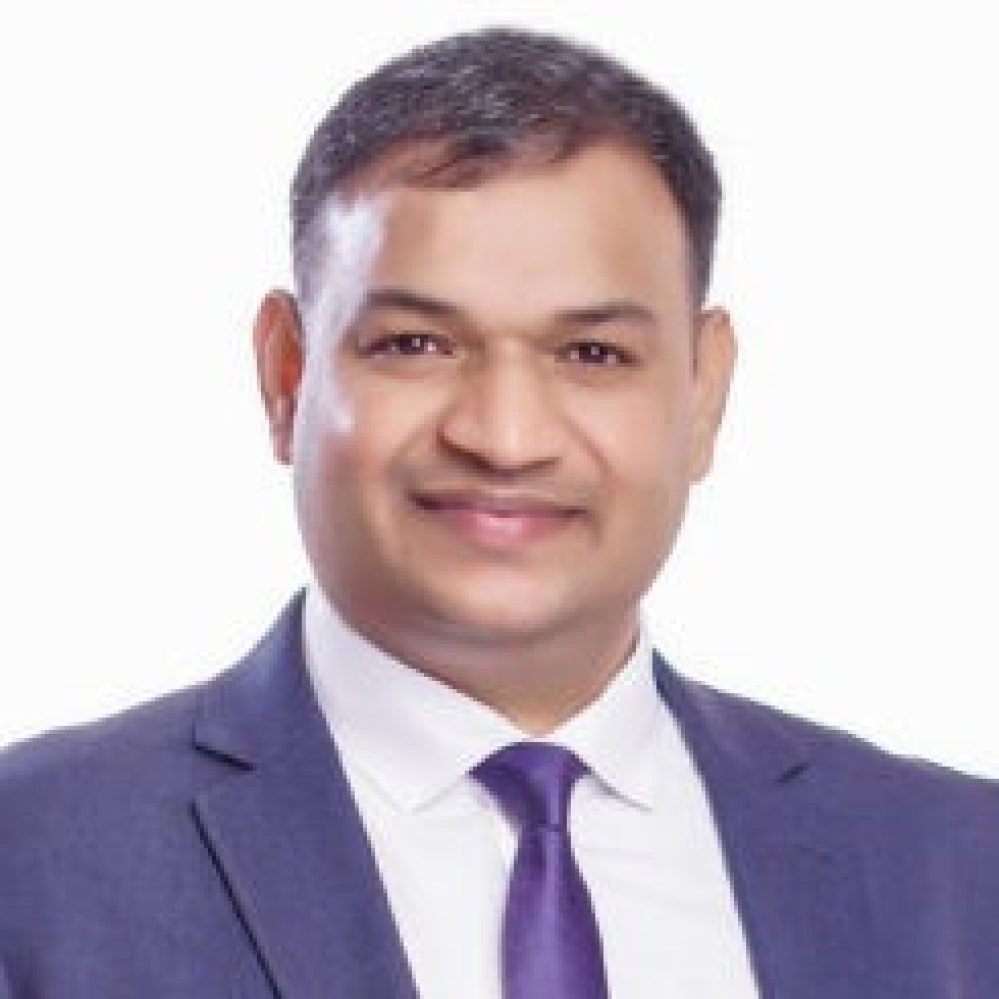
Surendra Singh Chandrawat
Global Managing Partner
