
+505
Nicaragua
We have a team of experienced professionals dedicated to supporting all your business requirements—ensuring smooth operations and full regulatory compliance. This strong foundation enables you to confidently establish and grow your business in Nicaragua with efficiency and assurance.
WHY NICARAGUA?
Nicaragua, officially the Republic of Nicaragua, is the geographically largest country in Central America, comprising 130,370 km2 (50,340 sq mi). With a population of 7,142,529 as of 2024, it is the third-most populous country in Central America after Guatemala and Honduras, and the largest by area. Nicaragua is bordered by Honduras to the north, the Caribbean Sea to the east, Costa Rica to the south, and the Pacific Ocean and shares maritime borders with El Salvador to the west and Colombia to the east. Nicaragua’s largest city and national capital is Managua, the fourth-largest city in Central America, with a population of 1,055,247 in 2020. Nicaragua is known as “the breadbasket of Central America” due to having the most fertile soil and arable land in all of Central America. Known as the “land of lakes and volcanoes”, Nicaragua is also home to the Bosawás Biosphere Reserve, the second-largest rainforest of the Americas.
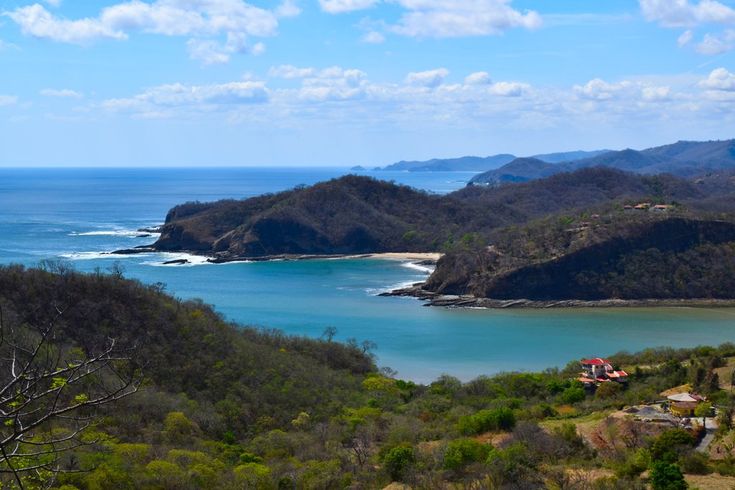
The biological diversity, warm tropical climate and active volcanoes have made Nicaragua an increasingly popular tourist destination. Nicaragua is a founding member of the United Nations and is also a member of the Non-Aligned Movement, Bolivarian Alliance for the Peoples of Our America, and Community of Latin American and Caribbean States.
Nicaragua has emerged as one of Central America’s fastest growing economies during the last decade. Nicaragua gross domestic product has experienced steady growth, with an average rate of 3.3%. One of the reasons for this positive performance is that, according to the World Bank, Nicaragua has the lowest export management costs in Central America, which makes it a very attractive country for export-oriented companies. Nicaragua has an open economy and its key industries are agribusiness, light manufacturing, and outsourcing services.
ADVANTAGES
Economic and Business Environment
- Strategic Location: Situated in Central America with access to both the Pacific and Caribbean oceans, Nicaragua offers easy access to regional and international shipping lanes and markets.
- Growing Economy: Nicaragua has experienced steady economic growth, with an open economy that actively promotes foreign investment.
- Cost-Effective Operations: The country offers lower operational costs, including affordable real estate and a competitive workforce, compared to many other nations in the region.
- Business-Friendly Policies: The government actively seeks foreign investment and provides legal frameworks such as the Foreign Investment Law (Law 344), which guarantees national treatment for investors and the free transfer and repatriation of capital and profits.
- Simplified Company Registration: Procedures for company registration can be streamlined through the Investment One-Stop Shop (VUI), reducing processing times.
Trade and Investment Incentives
- Free Trade Agreements: Nicaragua is a party to several major trade agreements, most notably the Central America-Dominican Republic Free Trade Agreement (CAFTA-DR) with the United States. These agreements provide preferential access, reduced tariffs, and duty-free imports/exports to large international markets, including the U.S. and the European Union.
- Free Trade Zones (FTZs): Businesses operating within FTZs are eligible for significant tax advantages, including 100% exemptions from income tax for the first 10 years, and exemptions from import duties, VAT, and municipal taxes, provided all products are exported.
- Sector-Specific Incentives: Tax incentives are available for both national and foreign investors in key sectors such as tourism, renewable energy, agriculture, mining, and light manufacturing.
Workforce and Resources
- Young Labour Force: A significant majority of the population is under 40, providing a large and available labour pool for the manufacturing and services sectors.
- Abundant Natural Resources: The country possesses diverse natural resources, including a well-developed agricultural sector (coffee, sugar, beef), gold and other minerals, and an ecologically diverse geography that supports a growing tourism industry.
- High Personal Safety: Nicaragua has been noted for having one of the highest levels of personal safety in the Western Hemisphere, which provides confidence to executives and their families relocating to the country.
TAX REGIME
Key Taxes
Income Tax (IR):
- Corporate: 30% on Nicaraguan-source income.
- Personal: 30% on Nicaraguan-source income (labor, pensions, interest).
Value Added Tax (VAT/IVA):
- Standard Rate: 15% on sales and imports.
- Exports: 0%.
- Exemptions: Basic foods, medicine, education, real estate transfers, etc..
Excise Tax (ISC):
Applied to specific goods (alcohol, tobacco, etc.), rates vary (10-60%).
Withholding Tax:
30% on payments to residents of identified tax havens.
Key Exemptions & Incentives
- Special Economic Zones (SEZs): 100% income and VAT tax exemption for 10 years (renewable), plus customs duty exemptions on imports for operations.
- Tourism & Productive Sectors: Exemptions and exonerations available.
- Agriculture: Exemptions on some basic goods.
- Non-Profits: Recent changes affect tax treatment of donations to non-profit organizations.
Other Points
- Foreign Income: Not taxed if sourced outside Nicaragua.
- Capital Gains: Generally 15%.
- No Gift/Inheritance/Wealth Tax: Though gifts might trigger capital gains tax.
NICARAGUA COMPANIES
Corporation (Sociedad Anónima – SA):
Most common for large businesses, flexible, capital divided into shares, requires at least two shareholders (any nationality), minimum capital starts at $1 (though more is recommended), and needs a local legal representative.
Limited Liability Company (Sociedad de Responsabilidad Limitada – SRL):
Ideal for SMEs/family businesses, capital in participations/contributions, requires two partners (foreigners can own 100%), needs a local representative, and has a minimum capital (e.g., $400 in some sectors).
Branch Office (Sucursal de Sociedad Extranjera):
For foreign companies wanting to operate in Nicaragua without forming a new entity; requires legalization of parent company documents and a local representative.
Sole Proprietorship (Empresario Individual – EI) / (Empresa Individual de Responsabilidad Limitada – EIRL):
For single entrepreneurs, offering limited liability; less common for foreign investors but available.
Partnerships (Sociedad Colectiva / Limited Partnership):
Other types like General Partnership and Limited Partnership exist but are less used than SAs and SRLs.
RELATED BLOGS


Contact Us
Get in touch with the right people to get the right help in setting up your business in Nicaragua.
enquiries@chandrawatpartners.com.